



 Search















Uncategorized
Rabby Wallet and Token Approval Management: Which DeFi Wallet Approach Fits You?
What if the most important security decision in DeFi happens after you click “Connect,” not when you first install a wallet? A token approval can quietly give a decentralized application permission to spend assets from an address later. That makes wallet choice less about having a polished balance screen and more about how clearly the software helps you understand permissions, transaction effects, and network context.
For US-based DeFi users comparing Rabby Wallet with alternatives such as MetaMask, a hardware wallet, or a standalone approval-revocation service, the useful question is not simply which product is “safest.” Each option addresses a different part of the risk. Rabby emphasizes transaction simulation and EVM-wide visibility; MetaMask offers broad familiarity and ecosystem reach; hardware wallets strengthen key custody; revocation tools help clean up permissions after the fact. These are overlapping tools, not interchangeable ones.
Token approvals are permissions, not transfers
To understand the comparison, start with the mechanism. Many ERC-20 tokens use an allowance function: a wallet owner authorizes a particular smart contract, often called the spender, to move up to a specified amount of tokens. The approval itself does not usually transfer funds. It creates a permission that the approved contract may use in a later transaction.
This distinction explains why approvals can be easy to overlook. A user may deposit liquidity, swap an asset, or interact with a yield protocol and remember only the visible action. In the background, the application may request an allowance. If that allowance is very large, sometimes described as “unlimited,” the contract may have room to move future tokens of that asset from the same address. The practical risk depends on the contract’s behavior, the user’s later deposits, and whether the contract or its administrative controls are compromised.
Approvals are also network-specific. An allowance granted on Ethereum does not automatically authorize the same spender on Arbitrum, Base, Optimism, Polygon, or another EVM-compatible network. That separation is useful, but it creates a monitoring problem: an active DeFi user can accumulate a long and fragmented list of permissions. A clean wallet on one chain may still have stale approvals elsewhere.
There is another boundary condition. Revoking an approval prevents future use of that allowance; it cannot undo a transfer that already occurred. Nor does revocation prove that a protocol is safe. It is a form of permission maintenance, not a substitute for checking the application, contract address, signing request, and wallet security.
Rabby Wallet versus MetaMask: visibility against familiarity
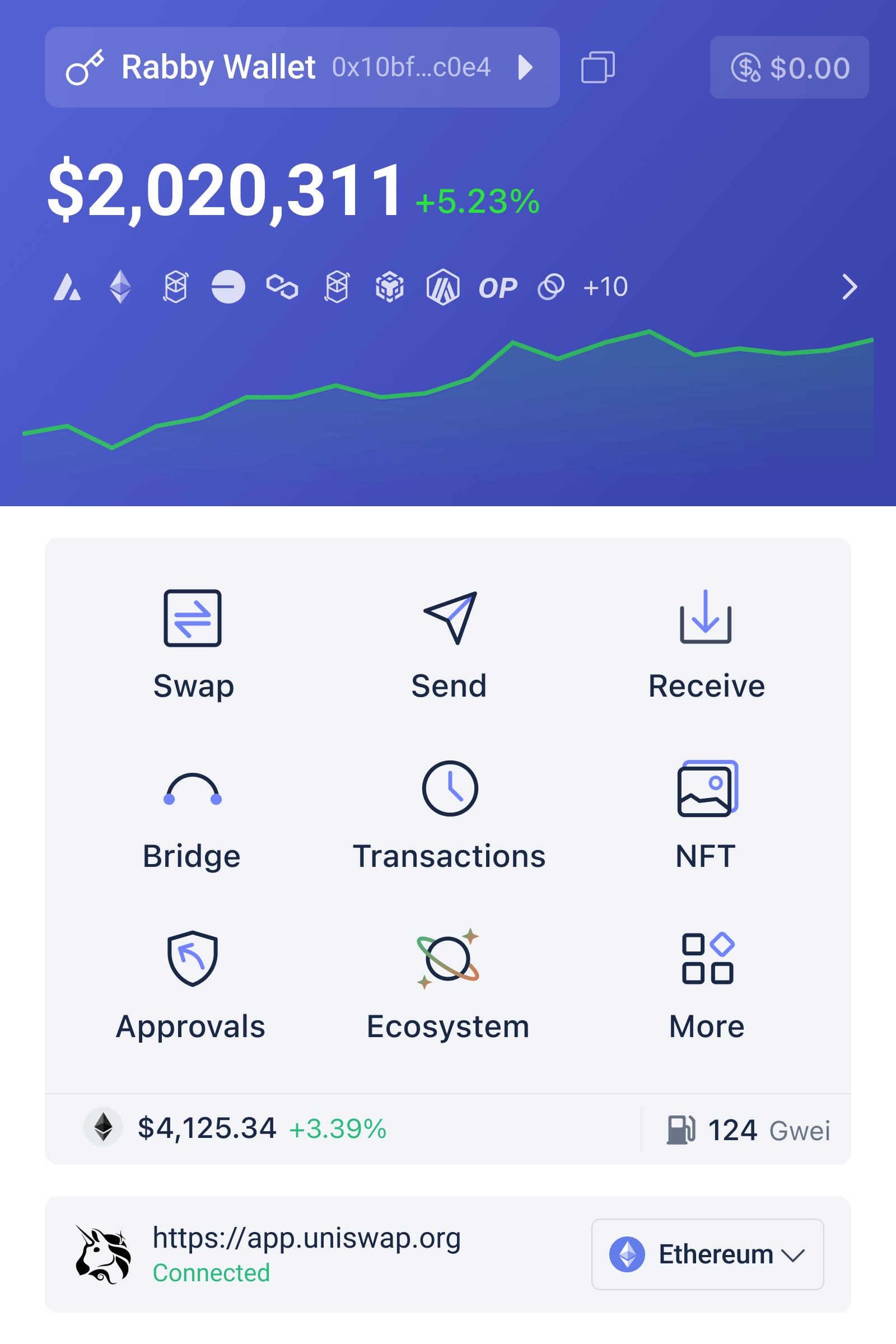
Rabby Wallet is designed around Ethereum and other EVM networks, with a workflow that places more emphasis on interpreting transactions before signing them. In practice, that can include showing the likely asset changes, highlighting risky interactions, and making network context more prominent. For token approval management, this is valuable because the user’s decision is not merely “approve or reject”; it is “which contract is receiving permission, for which token, on which chain, and for what apparent purpose?”
MetaMask remains a strong alternative for users who prioritize familiarity, broad browser support, and a large ecosystem of tutorials and integrations. Its popularity can reduce friction when a user moves between applications. The trade-off is that a familiar interface can encourage routine signing if the user stops examining the details. No interface can eliminate malicious contracts or guarantee that a transaction will behave as expected. The difference is how much interpretive help appears before approval and how disciplined the user remains.
For someone installing Rabby for the first time, the safest path is to obtain the software from a source that can be independently verified and to avoid search advertisements, unsolicited messages, and lookalike domains. Users seeking the official installation route can review the rabby extension information before adding a browser extension. After installation, check the extension’s permissions, create or import accounts only through a trusted workflow, and never disclose a recovery phrase to a website, support agent, or pop-up.
The sharper comparison is therefore not “Rabby has warnings, while MetaMask does not.” Both wallets require user judgment, and warning systems can produce false positives or fail to understand novel contract logic. A better mental model is that Rabby may reduce the cognitive cost of inspecting a transaction, while MetaMask may reduce the operational cost of finding a compatible application. Security improves only when the user uses the available information rather than clicking through it.
Rabby Wallet versus hardware wallets: transaction intelligence against key isolation
A browser wallet and a hardware wallet solve different problems. A browser extension keeps signing close to the DeFi application, which is convenient for swaps, lending, liquidity provision, and NFT markets. A hardware wallet keeps private-key operations in a separate device, making it harder for some malware or a compromised browser to extract the key. It does not, however, automatically make a dangerous approval safe.
If a user confirms a malicious token approval on a hardware wallet, the device may protect the private key while still authorizing the harmful permission. Hardware custody is strongest at the key-isolation layer; Rabby-style transaction interpretation is aimed more at the comprehension layer. Used together, they can be complementary: a browser interface helps explain the request, while the hardware device provides an additional signing boundary.
The trade-off is operational. Hardware wallets add setup, device management, backup responsibilities, and occasional compatibility friction. They can also create a false sense of security if the user treats the physical device as a substitute for reading transaction details. For a long-term treasury, high-value address, or organization with approval policies, that friction may be worthwhile. For a small experimental position, a separate low-value wallet may be a more practical risk-control measure.
Approval dashboards and revocation tools: prevention versus cleanup
Standalone approval-management tools are useful because they expose a historical or current view of token allowances across supported networks. They can help a user identify old permissions granted to applications that are no longer used and reduce allowances to zero. This is particularly relevant after testing unfamiliar protocols or moving assets between many EVM chains.
But a revocation dashboard is mainly a cleanup instrument. It usually becomes relevant after the approval has already been signed. Rabby’s value, by contrast, is most visible at the point of interaction, when a user can pause and ask whether the requested approval matches the intended action. Prevention and cleanup are different stages of risk management, and neither fully replaces the other.
Revoking everything is not always the optimal strategy. Some protocols may require a fresh approval for every deposit or trade if the allowance is reduced to zero, which can add transaction fees and friction. On networks with changing gas costs, repeated approvals may be inconvenient. A reasonable approach is to keep permissions narrow when practical, review them after using unfamiliar applications, and accept broader allowances only when the contract and operational need are understood.
A practical decision framework for DeFi users
Think in four layers: key custody, transaction interpretation, permission hygiene, and application trust. Rabby primarily helps with interpretation and the day-to-day EVM experience. MetaMask offers a familiar general-purpose route. A hardware wallet strengthens custody. Approval tools support periodic hygiene. The application itself remains a separate trust question because a wallet can display a request without being able to repair flawed protocol logic.
Before approving a token, identify the spender rather than relying only on the application’s brand name. Ask whether the token, network, and amount match the action you intended. Be cautious when a simple-looking operation requests a broad permission, when a site suddenly changes networks, or when a transaction involves an unfamiliar contract. Afterward, record which protocols you used and review allowances periodically, especially across every EVM chain where you hold funds.
For US users, a useful operational separation is to maintain one wallet for experimentation and another for more valuable holdings, while recognizing that multiple wallets increase backup and bookkeeping responsibilities. Never copy a private key into a cloud note, and treat browser-extension updates, phishing attempts, and fake support messages as part of the threat model. Wallet security is not a single product feature; it is a set of habits applied around a signing key.
What to watch as wallet security evolves
Recent Rabby messaging positions the wallet as a broad Ethereum and EVM tool for Chrome and Brave users. The meaningful question is how such positioning develops in practice: whether clearer simulations, more consistent chain coverage, and better approval visibility help users make fewer mistaken signatures. Those are plausible benefits, but they should be assessed by the quality and clarity of warnings, not by the number of supported chains alone.
The next important frontier is reducing the gap between what a smart contract technically requests and what a human thinks they are doing. Better interfaces may make that gap smaller, yet complex DeFi composability will continue to create limits. Simulations can be incomplete, contract states can change, and a benign-looking approval can become risky if control of the underlying system changes. The prudent assumption is that wallet intelligence is decision support, not an oracle.
Frequently asked questions
Does disconnecting a DeFi site revoke token approvals?
No. Disconnecting usually removes the site’s active connection to the wallet interface, but it does not change on-chain allowances. To remove an allowance, use the relevant token contract or a compatible approval-management tool and confirm the revocation transaction on the correct network.
Is Rabby Wallet safer than a hardware wallet?
They address different risks. Rabby can help users interpret transactions and approvals before signing, while a hardware wallet isolates private-key operations from the browser. A cautious user may combine them, but neither prevents every malicious contract interaction or guarantees that a transaction will produce the expected result.
Should every token approval be limited to the exact amount?
Limiting approvals can reduce the amount exposed if a spender is later misused, but it may require additional approval transactions and fees. The best choice depends on the protocol, chain costs, transaction frequency, and value at risk. The key is to make the allowance an intentional decision rather than an unnoticed default.
The central lesson is simple but easy to miss: a wallet does not merely hold tokens; it mediates permissions. Rabby, MetaMask, hardware devices, and revocation tools each cover different parts of that system. The strongest setup is not necessarily the one with the most features. It is the one whose custody, signing, and approval practices match the value at risk—and whose user is still willing to stop before clicking “Confirm.”
