



 Search















Uncategorized
Gas Optimization and Token Approval Management: A Safer DeFi Workflow with Rabby Wallet
You are about to swap a token on a decentralized exchange in the United States. The quoted trade looks reasonable, but the transaction asks for a token approval first. The network is busy, the estimated gas cost has moved, and a familiar-looking contract address appears in your wallet. Clicking “confirm” may feel like a routine step. It is not. An approval can give a smart contract permission to move tokens later, while the swap itself is a separate action with a separate risk profile.
This is where gas optimization and security become connected. The cheapest transaction is not automatically the best transaction, and reducing friction can sometimes increase exposure. A wallet such as Rabby can help users inspect transaction context before signing, but no wallet can turn an unsafe contract into a safe one. The useful mental model is simple: optimize the cost of each action without losing control over what that action authorizes.
The first myth: every token approval is harmless and temporary
A token approval is an instruction recorded by a token contract. It tells another address—often a decentralized exchange, lending protocol, bridge, or router—how many units of that token it may spend on your behalf. The approval does not necessarily expire when your swap finishes. Depending on the token and the interface, it may remain active until its allowance is reduced or replaced.
That distinction matters because approvals are permissions, not payments. A user may approve a contract to spend a large amount and only exchange a small amount immediately. If the approved contract is later exploited, incorrectly configured, or malicious, the remaining allowance can become part of the attack surface. The risk is not proof that a protocol is unsafe; it is a reminder that permission scope and protocol risk are related but different questions.
Unlimited approvals are often presented as a convenience because they avoid requesting a new approval for every later transaction. They can also save a future approval transaction and its gas. The trade-off is persistent authorization. A limited approval that matches the intended trade may cost more time or require another transaction, but it narrows the potential loss if something goes wrong.
A practical rule is to ask three questions before confirming: What contract is receiving the allowance? How much can it spend? How long do I want that permission to remain useful? If the answer to any of these is unclear, the right response is not to guess from a token logo or a familiar brand name. Pause and inspect the transaction details.
Why gas optimization is a risk-management problem
Ethereum and other smart-contract networks generally charge for computational work, not for the dollar value of an action. A transaction that changes several storage records can require more gas than one that changes a single record. Network demand then influences the price paid per unit of gas. In practice, users are balancing two variables: the amount of computation and the fee market at the time of submission.
Token approvals illustrate the first variable. An approval is usually a separate state-changing transaction. A swap may require an approval followed by the swap itself, meaning the user pays for two on-chain actions. Some token standards and protocols support methods that combine or reduce steps, but this depends on the token, application, and transaction design. A wallet cannot always remove a required approval transaction.
The second variable is timing. Waiting for a less congested period may reduce the fee rate, but it introduces opportunity cost and execution risk. A favorable quote can disappear while a user waits. On a volatile asset, the price movement may matter more than the saved network fee. Gas optimization is therefore not “always wait” or “always use the lowest setting.” It is a decision under changing prices, deadlines, and market conditions.
Fee settings also deserve careful treatment. A fee that is too low may leave a transaction pending, while repeatedly replacing transactions can create confusion about which request is current. On networks using a fee market with a base fee and a user-selected priority component, a higher fee can improve inclusion probability without guaranteeing a particular execution price. The wallet’s estimate is useful, but it remains an estimate based on changing network conditions.
How Rabby can improve the approval decision
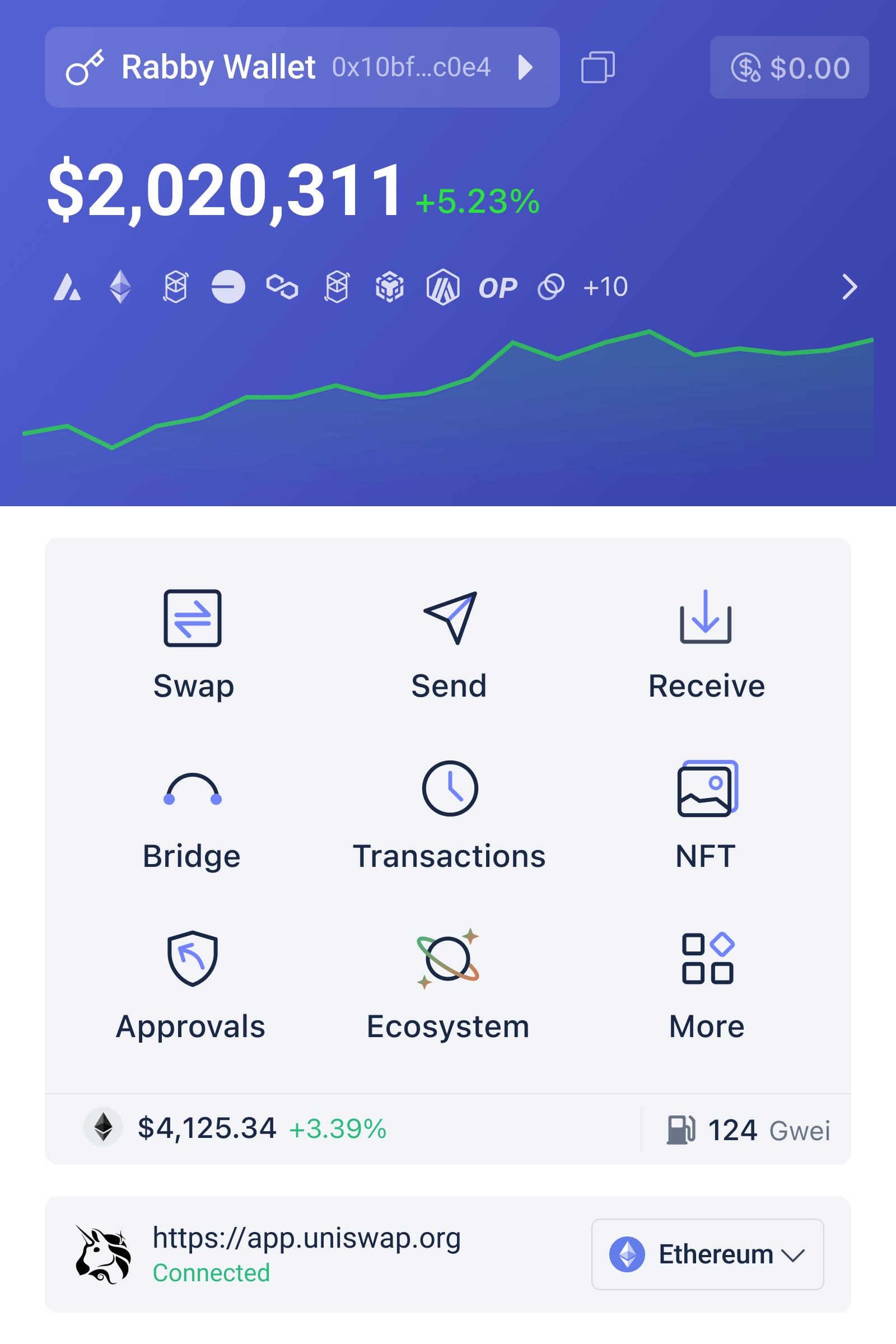
For users who want to rabby extension download, installation should be treated as the beginning of a review habit, not as a substitute for one. After installing the browser extension from a trusted source, connect only to the websites and accounts you intend to use. Before signing, read the transaction panel rather than relying solely on the application’s “confirm” button.
Rabby’s value is most apparent when it helps translate a technical request into a decision a person can evaluate: which network is involved, which contract is being called, what assets may move, and whether the transaction appears consistent with the user’s stated action. Transaction simulation and risk-oriented warnings can be valuable signals when supported by the available data. They are signals, not guarantees. Simulations can be incomplete, contracts can behave differently under later conditions, and a warning-free transaction can still involve economic or governance risk.
Look especially for mismatches. If you are trying to swap one token for another but the approval concerns an unrelated asset, stop. If a site says you are approving a small amount but the wallet displays a very large or unlimited allowance, investigate. If the spender address differs from the expected protocol contract, do not assume that a similar name means the same entity. Attackers frequently rely on visual familiarity and rushed signing.
One subtle point is that revoking an approval is itself a transaction. It consumes gas and does not erase historical records from the blockchain. Revocation reduces a contract’s future spending authority; it does not reverse a transfer that already occurred. This makes approval hygiene preventive rather than restorative. Reviewing allowances before interacting with a high-value wallet is usually more valuable than waiting until after a suspicious event.
A reusable workflow for safer DeFi transactions
Start with the purpose of the transaction. Write down, even mentally, the intended action: “approve this token for this exchange so I can make this swap.” Then compare that purpose with the wallet’s decoded request. This simple before-and-after check catches a class of mistakes that fee optimization alone cannot address.
Next, separate the approval decision from the execution decision. The fact that a swap looks attractive does not mean the requested allowance is appropriate. For a one-time or experimental interaction, a limited allowance may be preferable. For a frequently used, well-understood protocol, a broader allowance may be operationally convenient, but the user should still understand that convenience creates continuing permission.
Then assess the transaction economically. Compare the network fee with the expected trade size, the potential slippage, and the cost of waiting. A tiny trade on a congested network may be uneconomic even if the application advertises an attractive rate. Conversely, saving a few dollars in gas may be a poor bargain if a delayed transaction causes the quote to expire or the market to move against you.
Finally, review permissions periodically. Remove allowances that are no longer needed, especially for applications used once, abandoned interfaces, or contracts whose role you no longer understand. This is not a claim that every old approval is dangerous. It is an exposure-management practice: fewer unnecessary permissions mean fewer paths for a future failure to reach your assets.
Common misconceptions and their limits
“A wallet warning means the transaction is definitely malicious.” Not necessarily. Warnings can reflect uncertainty, unusual contract behavior, incomplete simulation, or a known risk pattern. They should increase scrutiny, not replace it. The correct question is what evidence produced the warning and whether the proposed action still matches your intent.
“A familiar protocol cannot misuse an approval.” Reputation lowers some forms of uncertainty but does not eliminate smart-contract bugs, compromised interfaces, upgrade risks, or user-interface substitution. Risk changes over time. A permission granted months ago should not be treated as permanently validated by the original decision.
“Revoking everything is always optimal.” Revocation improves control, but it costs gas and can add operational friction. If a user repeatedly interacts with the same protocol, constantly revoking and reapproving may create more transactions and more opportunities to approve the wrong contract. The sensible approach is proportional: reduce unnecessary allowances while preserving a workflow you can reliably audit.
“The lowest gas setting saves money.” A low fee can reduce the chance of prompt inclusion or leave a transaction pending. The economically relevant measure is the total outcome, including delay, replacement transactions, price movement, and failed execution where applicable. Optimization means minimizing expected cost and risk, not merely selecting the smallest displayed number.
What to watch as wallet design evolves
Wallets are likely to keep moving toward more contextual signing: clearer spender identification, better simulation, allowance history, and warnings tied to the actual asset and contract relationship. If these tools become more reliable, they could reduce the gap between what a smart contract requests and what a human understands. The limiting condition is data quality. A wallet can explain a transaction only as well as it can observe the contract, interface, and state involved.
For now, the strongest defense remains layered. Use a reputable wallet interface, verify the website and network, inspect approval scope, keep significant assets separated from experimental activity, and treat unexpected signing requests as a reason to stop. Rabby can make that process more legible, but the final control is still the user’s decision to approve—or decline—the transaction.
FAQ
Should I use unlimited token approvals to save gas?
Only when you understand the protocol, the spender contract, and the continuing permission involved. Unlimited approval can reduce future approval transactions, but it increases the amount that could potentially be moved if the spender or its interface is compromised. For one-time or higher-risk interactions, a limited approval is generally easier to contain.
Does revoking an approval recover tokens already lost?
No. Revocation prevents future spending under that allowance; it does not undo transfers already confirmed on-chain. It is a preventive control, so investigate suspicious activity immediately and review other permissions connected to the affected wallet.
Can Rabby guarantee that a DeFi transaction is safe?
No wallet can guarantee safety. Rabby can provide transaction context, simulations, and risk signals that help users make a more informed decision, but simulations may have limits and new contract or interface risks can emerge. Use wallet warnings as part of a broader verification process.
